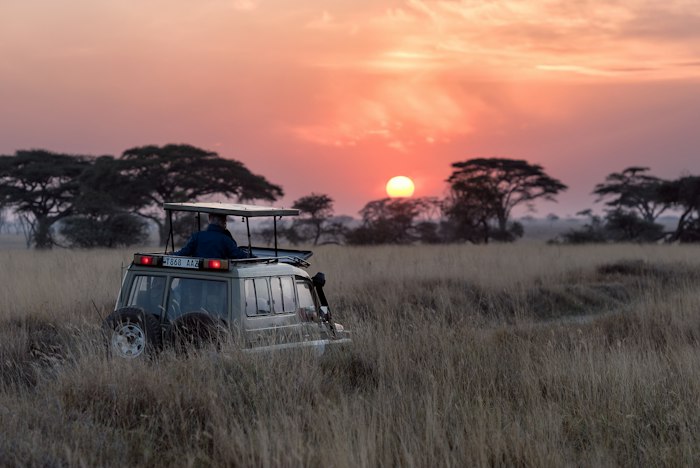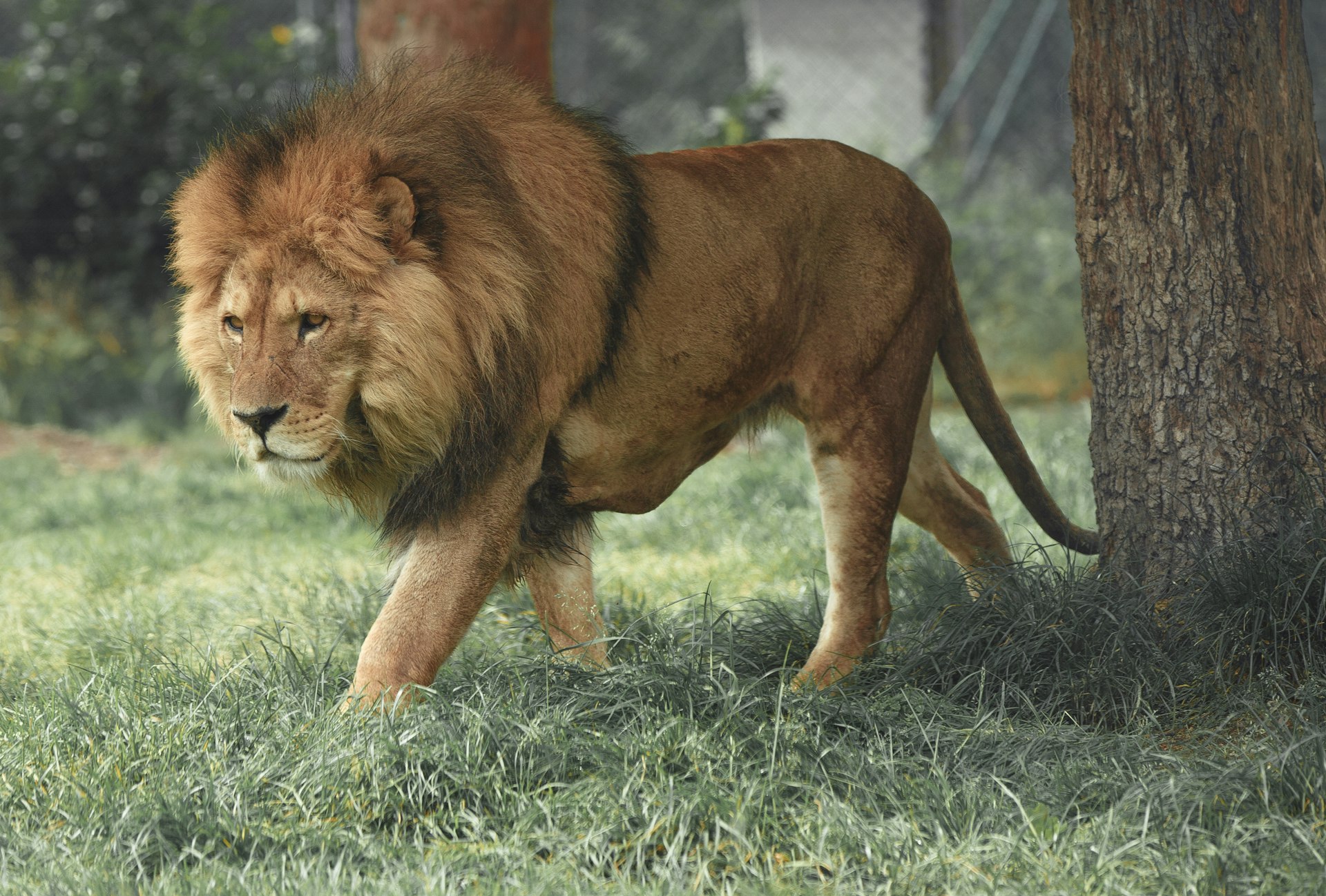

There is a moment, just before dawn on the African savannah, when silence becomes something you can feel. Then, from somewhere deep in the acacia scrub, a sound rolls across the plain — low, resonant, and utterly commanding. A lion is calling. And if you listen closely, the other members of the pride will answer, one by one, their roars weaving together into a chorus that researchers now believe carries detailed social information far beyond a simple territorial declaration.
For decades, the African lion (Panthera leo) was studied primarily as a hunting machine — the apex predator at the top of the savannah food chain. But over the past 20 years, a growing body of research — including studies conducted in partnership with the WildSafari research programme — has fundamentally changed how we understand one of Earth's most charismatic megafauna.
Pride: More Than a Group Name
The word "pride" for a group of lions is more apt than most people realise. Lions are the only truly social members of the Panthera genus. While leopards, tigers, and jaguars live largely solitary lives, lions form structured, long-term social groups with stable membership, shared cub-rearing responsibilities, and what appears to be genuine emotional bonds between individuals.
A typical pride consists of related females — mothers, daughters, sisters — who remain together for life, alongside a coalition of one to four males who have earned their place through competition. Young males are expelled from their birth pride at around two to three years, forming "bachelor coalitions" before they are strong enough to challenge for pride leadership.
"These females aren't just surviving together — they are actively looking out for each other, mourning together, and teaching their young in ways that we previously thought exclusive to higher primates."
— Dr. Lara Fitzpatrick, African Lion Coalition, 2024A Language of Roars and Rumbles
Lions are extraordinarily vocal animals, with a repertoire that goes far beyond the iconic full-throated roar. Researchers studying our resident pride at WildSafari have catalogued over 12 distinct vocalisation types, each appearing in specific social contexts.
The "moan-roar" — used to locate separated pride members — is one of the most studied. What is remarkable is that lionesses can recognise the individual roars of their pride companions even after periods of separation, and they respond differently to the roars of familiar males versus unknown intruders. This individual vocal recognition suggests a level of social cognition that was previously underappreciated.
- A lion's roar can be heard up to 8 kilometres away under ideal conditions
- Lionesses use soft "prusten" sounds (similar to a chuff) during positive social encounters
- Cubs communicate hunger and distress with high-pitched mews that trigger automatic caregiving responses in adult females
- Pride members use head-rubbing ("allo-rubbing") to reinforce social bonds and transfer individual scent markers
- Roar choruses serve as acoustic "roll calls" — each individual contributing at a slightly different frequency
Cooperative Hunting: Strategy Over Instinct
The image of lions as lone, powerful hunters belies the sophisticated cooperative strategies that lionesses employ during hunts. Research conducted at WildSafari and across wild populations in the Serengeti has documented what can only be described as tactical role assignment — with individual lions consistently taking specific positions relative to prey regardless of who initiates the hunt.
In what researchers call "wing" and "centre" formations, some females habitually position themselves to flush prey towards waiting "catcher" lions. These roles appear to be individually consistent, suggesting that lions may develop specialised hunting identities within their social group.
"We observed the same three females performing the same positional roles across 47 separate hunts over 18 months. This is not random — this is learned, repeated, social behaviour. This is culture."
— Dr. James Omondi, WildSafari Wildlife Research ProgrammeRaising the Next Generation
Perhaps the most striking evidence of lion social complexity lies in their approach to raising cubs. Lionesses within a pride synchronise their births — delivering cubs within days or weeks of each other — then raise them communally in what is known as a "crèche." Any cub in the pride may nurse from any lactating female, regardless of biological relationship.
This communal approach means that cubs with mothers who die young are not abandoned — they are absorbed into the care network of the pride. WildSafari's own pride saw this system in action in 2023, when a young lioness named Safi lost her mother to illness at just four months old. Within 48 hours, Safi had been fully integrated into the nursing rotation of two other lactating females. She is now thriving at nearly two years old.
Lion Culture: A Frontier of Research
The most provocative recent development in lion research is the emerging concept of lion culture — the idea that certain behaviours are not purely instinctual but are learned and transmitted socially between generations within specific groups.
Evidence includes differences in hunting techniques between geographically separated populations that hunt the same prey species, variations in territorial roaring patterns between prides that cannot be explained by acoustic environment alone, and the consistent transmission of individual-specific hunting roles from experienced females to their daughters over multiple generations.
These findings place lions in rare scientific company — alongside chimpanzees, orcas, and elephants — as species exhibiting what biologists now formally classify as cultural behaviour. It is a designation that carries enormous implications for how we approach lion conservation: not just preserving genetic diversity, but preserving the social continuity that allows lion culture to be transmitted across generations.
What This Means for Conservation
Understanding lions as deeply social, culturally complex animals transforms the conservation calculus. It is not sufficient to protect individual lions, or even to maintain population numbers. True lion conservation requires protecting intact social groups in sufficient habitat to allow natural pride dynamics, cooperative hunting, and cross-generational knowledge transfer to continue.
At WildSafari, every management decision — from habitat design to veterinary protocols — is made with lion social structure in mind. We believe that the key to the long-term survival of this species lies not just in what we protect, but in how deeply we understand what we are protecting.